"The Sahara of Snow" is from the amazing drummer Bill Bruford's album "One of a Kind," a recording that I almost wore out in my car's old cassette deck (yeah, I drive a very old car, and I have very old recordings on cassettes, and I feel no guilt about this). This melody is quoted very nicely in a recording by a faux group named Stanley Snail on a Yes tribute album. Their cover of the Yes song "Siberian Khatru" is as good as the original, and in some ways...dare I say it...a little better. Check out the Bruford track first, then listen to the middle break in Khatru. You prog fans will be pleased, I think.
Bruford's group includes:
Bill Bruford - Drums and Percussion
Jeff Berlin - Bass and Vocals
Allan Holdsworth - Guitar
Dave Stewart - Keyboards and Synthesizers
Stanley Snail's lineup includes:
Nick D'Virgilio - Drums, High Vocals
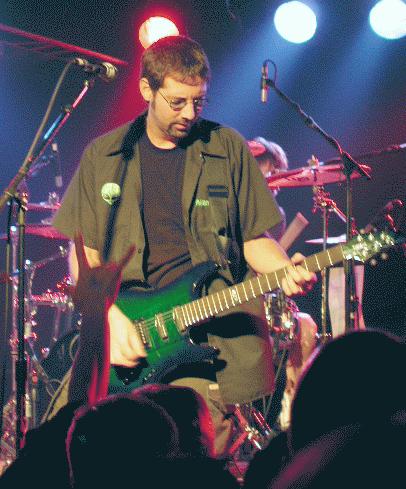
Mike Keneally - Guitars, Mid Vocals
Kevin Gilbert - Keyboards, Low Vocals
Bryan Beller - Bass
Enjoy the rest of your Saturday, or whatever day you happen to find yourself inhabiting.
George Martin, legendaty producer who often was referred to as the "fifth Beatle" has died.
From the story at The Rundown:
George Martin, longtime producer for English rock band the Beatles, died peacefully at his home Tuesday, his manager confirmed in a statement.
Beatles drummer Ringo Starr was among the first to pay tribute on
Twitter. “Thank you for all your love and kindness George peace and
love,” he wrote. British Prime Minister David Cameron called Martin a
“giant of music.”
George Martin, longtime producer for English rock band the Beatles, died peacefully at his home Tuesday, his manager confirmed in a statement.
Beatles drummer Ringo Starr was among the first to pay tribute on
Twitter. “Thank you for all your love and kindness George peace and
love,” he wrote. British Prime Minister David Cameron called Martin a
“giant of music.”
I fell in love with Joni Mitchell's music the first time I heard her songs. Maybe it was her lyrics, those words that could be simple expressions, melancholy explorations, playful banter or somewhat cryptic metaphor as her style became more and more evocative and less direct.
Maybe it was her music. Mitchell was a folk musician in her early days, but as she grew musically, one style wasn't quite enough to help her say what she needed to say. A guitarist with a penchant for finding new ways to play, she is said to have become accomplished in more than 50 alternate tunings. And she was a musical explorer who found jazz...or jazz found her...and it was a good fit.
But I don't remember which of her songs was the one I heard first, the one that caught my attention all those years ago, because two always come to mind. It could have been "Both Sides Now," a beautiful, almost ethereal song that uses the imagery of clouds as a metaphor for how aspects of life become visible, then obscured, and how we never really get a clear view of life as long as these "clouds" drift in and out of view. Life seen as a series of transient moments, perhaps. Her most frequently covered song, one of the most enduring versions is performed by Judy Collins.
This was the first hit song written by Joni Mitchell, whose version appeared on her 1969 album Clouds. Mitchell recalled: "I was reading Saul Bellow's Henderson the Rain King on a plane and early in the book Henderson the Rain King is also up in a plane. He's on his way to Africa and he looks down and sees these clouds. I put down the book, looked out the window and saw clouds too, and I immediately started writing the song. I had no idea that the song would become as popular as it did."
Then again, it could have been "Big Yellow Taxi." The bouncy pop melody provides an almost ironic counterpoint to the wistful, somewhat sardonic lyric that ultimately takes a look at loss from more than one point of view. The phrase "...you don't know what you've got till it's gone" repeats throughout the song, and it begins to sound less like a lament and more like a warning.
Mitchell (from a 1996 interview with the Los Angeles Times): "I wrote 'Big Yellow Taxi' on my first trip to Hawaii. I took a taxi to the hotel and when I woke up the next morning, I threw back the curtains and saw these beautiful green mountains in the distance. Then, I looked down and there was a parking lot as far as the eye could see, and it broke my heart... this blight on paradise. That's when I sat down and wrote the song."
Joni Mitchell hasn't performed in a very long time. Years of smoking took her voice, a voice that slipped easily into a supple soprano in her youth, a voice that settled into a dusky, expressive alto in her middle years. A few years back, she began to suffer from a painful skin condition called Morgellons disease, which according to the Mayo Clinic is "...an uncommon, unexplained skin disorder characterized by sores, crawling sensations on and under the skin, and fiber-like filaments emerging from the sores. It's not certain what these strings are. Some say they are wisps of cotton thread, probably coming from clothing or bandages. Others say they result from an infectious process in the skin cells. Further study is needed." That disease led her to become a virtual hermit, venturing out from her Los Angeles home only occasionally for visits to her family in Canada.
And then, she suffered a brain aneurysm last spring. Reports suggest that her health has improved since, but information seems spotty at best, and we can only wonder and hope for the best.
But her days of performing are now behind her. It's time now to rest and heal.
In the end, it really doesn't really matter which of those wonderful tunes came first, since they both led me to the same wonderful source. Joni Mitchell's music has been a bit part of my life for many years, and I can't imagine a perfect world without her music being a part of it.
In a perfect world, King's X would be a multi-platinum band packing in sold-out crowds at the biggest auditoriums worldwide. They would be getting tons of airplay and the band would grace the covers of hundreds of publications. The late night talk shows would have them on speed-dial.
But King's X has never been that kind of band. That would have required them to compromise their vision and their musical integrity. These guys are road warriors who still work the club circuit, having garnered critical acclaim early in their careers as they continue to maintain their long-standing reputation as a "band's band." The general public may be unaware of them, but ask almost any musician if they know about King's X.
Few hard rock bands are as widely respected yet criminally overlooked as King's X. The trio (bassist/vocalist Doug Pinnick, guitarist/vocalist Ty Tabor, and drummer/vocalist Jerry Gaskill) seemed destined for the big time with their irresistible blend of melodic Beatlesque harmonies, metallic riffing, and prog rock detours, yet for reasons unknown, never truly broke through to a mainstream audience. Pinnick (b. September 3, 1950) first met Gaskill (b. December 27, 1957) when the duo was touring with the Christian rock outfit Petra, and soon after, met up-and-coming guitarist Tabor (b. September 17, 1961). The trio joined forces in 1980 with the Top 40 cover band the Edge and thoroughly played the Missouri bar scene. By 1983, the band had changed its name to Sneak Preview and was now completely focusing on original compositions -- resulting in an obscure and very hard to find self-titled debut album released around this time.
Sneak Preview were offered a recording contract in 1985 if they relocated to Houston, TX, which they did, but the deal failed to materialize. Undeterred, the trio continued on and perfected its sound and songwriting further, catching a break when ZZ Top video producer Sam Taylor took the group under his wing, helping it secure a recording contract with New York's Megaforce label in 1987, and suggesting that the band change its name to King's X (the name of a local outfit that Taylor was an admirer of back in his high-school days).
In 1988, King's X released their debut album, Out of the Silent Planet. Despite praise among critics, the public didn't know exactly what to make of the group's original and multiple genre-encompassing style, and the album sank without a trace. But with the band's sophomore release, 1989's classic Gretchen Goes to Nebraska, a buzz began to develop around King's X in the metal community...
I discovered the group in college. A classmate in one of my journalism classes and I were talking music in the newsroom one day, and he mentioned that, given my taste, I'd probably like this band called King's X.
"Who?"
"King's X."
"What style do they play?"
He thought for a moment. "It's kinda hard to explain. It's metal, but it's really melodic at the same time. I could bring in a cassette if you wanna hear 'em."
"Yeah, I do want to hear them. Bring it in."
The next day, he handed me a copy of the band's first album "Out of the Silent Planet."
Ty Tabor - guitar and vocals
"Here you go," he said. "I think you're gonna like this album."
"Well, they named their recording after a C.S. Lewis novel, so points for that."
He grinned. "Let me know what you think."
After classes, I took the recording back home to my apartment, cued up the stereo, and slipped the tape into my player.
Wow.
"In the New Age" was a killer lead-off track. A swirl of sound...random guitar notes processed through delays and echoes, along with bits and pieces of cymbal percussion, all of it building until it gives way to a power trio chugging out a decidedly-metallic groove.
Doug Pinnick - bass and vocals
xAnd then, the vocals. Guitarist Ty Tabor, bassist Doug (AKA dUg) Pinnick and drummer Jerry Gaskill blended together for some of tightest, sweetest harmonies this side of Crosby, Stills and Nash, with a similar feel. It was a vocal sound that shouldn't have worked in the aggressive musical context playing behind it. Yet it worked in fantastic ways.
I was blown away, I continued to be blown away with each song that followed. Tabor's guitar playing was nothing less than inspired...his chunky rhythm work would give way to his soaring solos that took each song to great places. And that voice. It was the voice of a choirboy that should have been out of place, yet it never was.
Pinnick's bass work was amazing. He had a tone unlike any bass sound I've ever heard, before or since. It was a metallic growl that held down the bottom end, yet provided enough definition to let everyone know where he was going. He was in charge. His voice was much more rock-and-roll to my ears, edgy and soulful. Years later, Deep Purple would ask him to become the band's lead vocalist. He declined and stayed with King's X.
Jerry Gaskill - drums and vocals
Gaskill's drumming was spot-on, laser-focused and full of dynamics, since the band's style was nothing if not a wonderful exhibition of dynamics. He could be aggressive when the song called for it, then shift on a dime to something much more laid-back (yet still in the pocket), all the while providing a third voice to round out the harmonies.
With one album and one afternoon, I became a huge fan of a band I'd only heard about a day earlier. Their style was always a bit hard to figure...I've heard it described as an amalgam of progressive metal, funk and soul, with vocals that combine elements of 1960s-era British invasion, blues and gospel...their earliest recorded songs actually did have a sort of spiritual feel, whether intentional or not.
These days I have almost everything they've recorded, and they are still one of the most consistently excellent and fascinating groups that I've had the pleasure to hear.
Today's track comes from the album "Ear Candy," the band's sixth album.
Editor's note: Here's one of those promised sporadic appearances of. ...in a perfect world. Enjoy.
Standing on the highway My pants around my knees I'd write her name out on the road But I can't piss Denise
With a lyric like that, you might expect a novelty song romp. You'd be wrong. Very wrong. "Grim" lives up to the image that title invokes. This is a dark song that reflects a lot of pain and hurt expressed by a man struggling to understand how he lost his true love to Jesus.
Not that they didn't have their novelty song moments. The Ass Ponys song ":Little Bastard" fits that bill, and it was the infectiously catchy hit single that elevated them to mainstream status. But the Ponys were a much smarter band than one single might imply. Frontman Chuck Cleaver's songs were vignettes depicting folks on the fringes, misfits who didn't quite fit in, who didn't really want to fit in. And his wordplay was/is wonderfully evocative as the band shifts effortlessly from an acoustic, alt-country-style vibe into jarring rock clamour.
The Ass Ponys made their return in November to play their first shows in over a decade at the Woodward Theater in Cincinnati.
Mark David Stewart and Bryan Pfahl grew up in Hanna, Alberta, a farm-and-oil town of less than 3,000 people that is not without a certain musical pedigree. “There’s a famous Canadian rock band from there,” Stewart explains. “We don’t want to give them any press, but they start with an ‘N,’ end with a ‘K,’ and have ‘ICKELBAC’ in the middle.”
An indie singer-songwriter himself, Stewart tends toward more refined fare than the music of his fellow former prairie-dwellers, who are often cited as the world’s most hated band (go ahead, just Google “Nickelback” and “hate”). His heroes include John Prine, Nick Cave, Richard Thompson, and Cincinnati’s own Chuck Cleaver. A friend played Stewart Ass Ponys’ breakthrough third album, Electric Rock Music, soon after it came out on A&M Records in 1994, and Cleaver’s songs and worldview struck a chord.
Which is why, on the first weekend of November, Stewart and Pfahl travelled from Calgary to Cincinnati to see Ass Ponys play two sold-out nights at the Woodward Theater in Over-the-Rhine: the band’s first shows in over a decade.
The pilgrimage was not unnoticed by the band. “Y’all are motherfuckers,” Cleaver said from the stage on Night One. “Man, you came from everywhere to see us.” Pause. “I wouldn’t come!”
It was a hero’s welcome straight from Cleaver’s irascible, profane heart. Drummer David Morrison snapped a phone picture from behind his kit before the band had even played a note, and the crowd instantly revved into call-and-response mode for the set opener, “Hey Swifty,” the first song on the band’s first album, 1990’s Mr. Superlove. It was also a far cry from the band’s denouement, when they were quietly gigging around town, several years removed from their last record (2001’s Lohio), until they simply stopped booking shows and Cleaver turned his attentions elsewhere. The four aren’t even 100 percent certain when and where they played for the last time. “I have a piss poor memory for which shows and where but the other guys think it was some shitty club down on Main Street,” says Cleaver. “I do remember that there was hardly anyone there.”
But that’s how band reunions go. You play your last show terribly and/or with little fanfare, then return years later to find pent-up demand, rekindled sparks, and an upgraded, upsized venue filled with people of a certain age out past their bedtime, some of them trying not to spill that rare third beer onto their tucked-in shirts or blazer, others with fingers pointing and fists in the air like at a Springsteen or Guided By Voices show. “For a bunch of introverts, this is the weirdest thing in the world,” Cleaver said at one point from up on stage, before adding: “You’re probably introverts too.”
Editor's note: Here's one of those promised sporadic appearances of. ...in a perfect world. I'm still focusing
pretty intently on my ongoing job search, so wish me luck. I'm going a little stir crazy.
I
became a music fan very early in life, a few years before I began
learning to play guitar. I carried a small, pocket-sized AM transistor
radio around with me everywhere I went, a cheesy little white plastic
earpiece attached to an equally-cheesy little cable plugged into a jack
on the radio's side. When I was 11, my folks gifted me with my first
guitar on Christmas. It was a Decca acoustic, with a sunburst finish and
a black plastic pickguard inscribed with vines and flowers. But like
most imported instruments in the 1970s, it was a horrible and
cheaply-made monstrosity that made you suffer for your art every time
you laid fingers upon the fretboard.
But
in spite of that, I learned. Upon encouragement from my guitar teacher,
my parents sprung for a really good guitar made by Gibson. It didn't
have the typical red and white Gibson label with the model and serial
number pasted inside the guitar and visible through the soundhole, but I
finally was able to identify it just last year as a Gibson Jubilee, a
fairly uncommon model. My playing and learning improved immediately once
I had an instrument that wasn't inflicting both sonic and physical pain
each time I picked it up.
The
next Christmas I got and AM/FM radio that replaced my little AM
radio, and I went off exploring for music when I wasn't playing. Each new discovery was a revelation. Not long after, TV began playing
catch-up with popular music. NBC's "The Midnight Special" and ABC's "In Concert" both aired late Friday night, and I would flip between the two shows to see who was playing. On late Sunday nights, "Don Kirshner's Rock Concert," a syndicated show, aired on our local CBS affiliate. I watched them all, and I discovered even more music.
rock/glitter rock
was in full swing, and even performers who didn't necessarily fit into
that genre would glam things up onstage, since audiences of the time
began expecting shows that were as visual as they were musical. SAHB was
more of a bare-knuckle rock and roll band (with the occasional theatrical flourishes), but when their set began on
that TV show, I was taken at first by the band's look. Lead vocalist
Alex Harvey looked pretty normal, decked out in jeans, striped t-shirt
and a tuxedo jacket (complete with tails). Cousins Hugh McKenna and Ted
McKenna were obscured behind keyboard rigs and drum kits, so they
couldn't really contribute to the costumed visuals.
That
left things up to bass player Chris Glen and guitarist Zal Cleminson.
Glen was pretty outrageous in his electric blue spandex jumpsuit,
complete with what appeared to be a silver codpiece. Cleminson was
another story...in his green spandex jumpsuit, his face was painted
stark-white, with bright red lips and a bit of black makeup around the
eyes. He looked like a demented mime in harlequin paint, or perhaps a
rock-n-roll Joker. I found him a bit frightening, but I couldn't look
away.
But it soon became obvious that this was a band that could
play. Cleminson in particular was a formidable guitarist...his bluesy
riffs and solos propelled the SAHB along behind Harvey's excellent
vocals, which today remind me a bit of the late Bon Scott from AC/DC.
I'm willing to bet they were influenced by the Scottish rockers.
I
never really heard much from The Sensational Alex Harvey Band after
that TV appearance. They were huge in Great Britain and Europe, but they
never managed to break big in the United States. Local radio didn't
play them; even the one AOR station I could pick up didn't air their
music.
The
Sensational Alex Harvey Band formed in 1972 when veteran vocalist Alex
Harvey (February 5, 1935, Gorbals, Glasgow, Scotland; died February 4,
1982, Zeebrugge, Belgium) teamed with struggling Glasgow group Tear Gas.
Zal Cleminson (born May 4, 1949; guitar), Hugh McKenna (born November
28, 1949; keyboards), Chris Glen (born November 6, 1950, Paisley,
Renfrewshire, Scotland; bass), and Ted McKenna (born March 10, 1950,
Glasgow, Scotland; drums) gave the singer the uncultured power his
uncompromising rasp required and were the perfect foil to the sense of
drama he created. Armed with a musical and cultural heritage, Harvey
embarked on a unique direction combining elements of heavy rock,
R&B, and the British music hall. He created the slum-kid Vambo,
celebrated pulp fiction with "Sergeant Fury," and extolled a passion for
B-movie lore in "Don’t Worry About the Lights Mother, They’re Burning
Big Louie Tonight." Framed, SAHB’s 1972 debut album, was accompanied by a
period of frenetic live activity, while Next... reflected a consequent
confidence that was especially apparent on the title track, a harrowing,
atmospheric rendition of a Jacques Brel composition.
But
Harvey's health was failing, exacerbated by the band's harsh touring
schedule. He left the band in 1976, and ended up in the hospital.
He
[Harvey] entered hospital to attend to a recurring liver problem,
during which time the remaining members recorded Fourplay as SAHB
(without Harvey). Hugh McKenna was then replaced by Tommy Eyre and in
August, 1977 Harvey rejoined the band to complete Rock Drill. However,
three months later he walked out on his colleagues during a rehearsal
for BBC’s Sight and Sound program, and despite the ill-feeling this
caused, it was later accepted that his return had been premature given
the extent of his illness. Despite pursuing a solo career at a more
measured pace, Harvey died as a result of a heart attack on February 4,
1982.
You can find a bit more on The Sensational Alex Harvey Band, including videos, at this link.
Editor's note: After a few less-than-satisfying
efforts at blogging recently, I decided to take a brief hiatus. I'd
rather post nothing at all if my other option is to post something I
consider below my ability. It felt like time to refocus. ...in a perfect world
may appear a bit sporadically for a while, since I'm also focusing
pretty intently on my ongoing job search. I hope to go back to my old
schedule soon, though.
My trusty, and still functional, Teac model 144 Portastudio
My first experience with multi-track recording happened when I was in my teens back home in Eastern Kentucky. I used a pair of stereo cassette decks; one was mine, the other I borrowed from one of my best friends. I recorded a part on one, then transferred that part to the second deck as I played along, adding a second part. I would repeat this process until I had all the guitar, bass, drum and vocal tracks I thought the song I was recording needed. In the process, I also built up a lot of residual noise as layers of tape hiss also got transferred with each pass. I didn't care...I finally was achieving one of my big musical goals. I wanted to be one of those musicians who could play every part on every instrument on their songs, like some of my heroes: Todd Rundgren, Stevie Wonder, Tom Scholz (hey, Boston used to be a pretty big band back in my early days). R. Stevie Moore, the king of low-fi home recording, would come along later, and I felt vindicated when I heard his noisy little pop masterpieces. For more, see the documentary "I Am A Genius (And There's Nothing I can Do About It)," billed as "a film about some situations with R. Stevie Moore." I was doing things in a similar way. It was a great way to create.
"I Like To Stay Home" by R. Stevie Moore
Once I landed my first full-time job as a stock clerk at a big hardware store in Eastern Kentucky, and then as a sales clerk at the same store not long after, my next plan was to invest in better recording gear. Not an easy task, since minimum wage at the time was just barely past $5 an hour. But I was determined.
I attended a demo seminar that introduced the newly-released Teac model 144 Portastudio, hosted by a music store in Huntington, WV called The Pied Piper, the biggest music retailer in the KY/OH/WV tri-state area. That seminar convinced me that the Portastudio would be my next recording tool of choice. This magnificent machine would give me four tracks of recording space, and the ability to bounce multiple tracks to one channel. I could build up a lot of overdubbing in just one recorder, and the tape noise, while still pretty substantial, was going to be less than what I got on the gear I was using
Pretty much every musician back home at every level...rank beginners to working pros...shopped at The Pied Piper. They had a large inventory of the newest gear, the clerks seemed to know what they were talking about, and the owners weren't adverse to knocking a few bucks off here and there to seal a deal. That's what they did for me...the model 144 back then retailed for around $1,200, and I still needed microphones, mic stands and assorted accessories. Even after discounts, which were quite good, I still had to complete the process with a loan through a local finance company (and my Dad had to co-sign). I made payments in person at the finance company office every payday until it all was paid off. Note: Today you can get a digital 32-track Portastudio for less than $500. Ah, technology.
But I had my studio. And since there was no room at my house for the recording gear, a decrepit drum kit, some really good Zildjian cymbals, one electric guitar and amp, one acoustic guitar and a borrowed bass guitar, I set up shop in the back bedroom of my grandmother's house. She lived alone, during the daytime she worked at her furniture store next door, and even when she was home, she only lived in three rooms of her house...the kitchen, the bathroom and the living room, where she also slept (I never knew her to sleep on anything but her couch). She seemed to like having me around, so I would show up at her place after work on Friday or Saturday, and I would seal myself in the studio until late Sunday night. I wrote song lyrics throughout the week while I was at work, snatching some stray moments here and there to scribble down a few lines, and by the weekend I would have a song or two to put to music and record.
I wrote hundreds of songs back then. The vast majority of those songs really sucked, but I kept at it, since I was totally in love with the process. Even when I didn't have a song to work on, I still loved being in that studio, surrounded by music, since that also is where my cassette collection lived. That was my first man-cave, my musical sanctuary, and when I wasn't playing, I was listening, and my listening tastes were (and still are) voracious.
Those were great days.
From the story Lo Fi Luv (Note: There are links to some magnificent little home recorded gems in this piece...all of them are worth a listen.)
By Robert Burke Warren The Weeklings
I’m in a recording studio, working on a song, spending time and money like I’ve got both to burn. My cohorts and I execute take after take, piling on overdubs and effects, spending hours mixing, remixing, compressing all sounds into a pristine, vacuum-sealed pulp. It’s a kind of mania, this activity, not unlike some poor bastard casino gambler, operating in a clueless, timeless haze.
Finally it’s quitting time. Bill is paid, song is mastered, pressed up, and sent into the world. After some rest and brain recalibration, I find a battered cassette demo of the same tune, slide it into the tape deck, hit PLAY, and suffer an all-too-common songwriter’s dark epiphany: I made a terrible mistake. This tossed-off, lo fi version is better than the produced version.
The hairy, Hobbit-y little demo, crammed onto a tiny strip of delicate, distressed tape, is laden with hiss, the levels are off, mistakes abound, the singing is flawed, there’s distortion where there shouldn’t be, frets buzz and chairs squeak, and the ambient noise of the room and/or the outside world intrudes. But therein resides the soul of the song.
Granted, lo fi isn’t always the best way to capture one’s work. I love plenty of fussed-over, expensive, big productions. Some faves: What’s Going On, A Night at the Opera, Born to Run, Pet Sounds, Physical Graffiti, Nevermind, Paul’s Boutique, Achtung Baby, Odelay, Automatic For the People, Mylo Xyloto, etc. None of these would sound better, I don’t think, realized on four-track cassette tape, or through the pinhole microphone of an iPhone.
But some artists, even if they have access to cash, time, and pro equipment, realize (or, sadly, realized) such assets can actually impair the quality of their work.
As for the reference to The Buggles? Here's an explainer, and some insight into my odd sense of humor:
This sad note was posted today on the Tangerine Dream website:
Dear Friends,
This is a message to you we are deeply sorry for…
On January 20th, Tuesday afternoon, Edgar Froese suddenly and unexpectedly passed away from the effects of a pulmonary embolism in Vienna.
The sadness in our hearts is immensely.
Edgar once said: “There is no death, there is just a change of our cosmic address."Edgar, this is a little comfort to us.
One of the pioneers in the Krautrock music scene, Edgar Froese was a founding member of the legendary band Tangerine Dream and its only constant member since 1967. Almost from the beginning, the group began creating a sometimes-ethereal, sometimes percolating and insistent blend of synthesized music. This style employed minimal arrangements combined with sequencer-driven parts that would repeat in almost-hypnotic waves that gave Froese and his bandmates space to improvise synthesizer and guitar parts, as well as occasional saxophone and flute passages. Tangerine Dream essentially helped to define a number of styles that have developed over the years such as new age, ambient, contemporary space music and electronica, as well as the elements that crop up frequently in progressive rock and dance music.
Edgar Froese, the founder of pioneering electronic band Tangerine Dream, has died at the age of 70. According to Tangerine Dream’s Facebook page, Froese passed away “suddenly and unexpectedly” from the effects of a pulmonary embolism. He was residing in Vienna, Austria.
A native of West Berlin, Froese founded Tangerine Dream in 1967 and remained the band’s only constant member through its six decade existence. The band is well known for its mammoth creative output, having released over 100 albums in addition to scoring countless movie film scores and soundtracks.
Alongside fellow German outfits like Kraftwerk and Can, Tangerine Dream was a torchbearer of the Krautrock genre. In the 1970s, Froese began experimenting with new studio techniques, including sequencers and the Moog synthesizer. It was during these years that Tangerine Dream experienced the height of its critical and commercial success, as 1973’s Atem was crowned album of the year by influential UK DJ John Peel, and 1974’s Phaedra reached No. 15 on the UK charts.
I became a fan of Tangerine Dream the first time I heard them, and I remain a fan to this day. They are one of the big reasons I became interested in synthesizer music, and why I own several synthesizers that I don't play nearly enough these days. I have a relatively small but beloved collection of the band's CDs and well-worn old cassette tapes. This is music I use for relaxation, for introspection, for background music when I write. Rather than distract, it seems to help me focus.
I don't know what this means for the future of Tangerine Dream. Indeed, Edgar Froese was Tangerine Dream, its heart, soul and creative wellspring. I hope it continues, though, carrying on his legacy.
Michael is you, he has your face he still has your eyes remember Peter is me 'cept when he smiles And if you look at them both for a while you can see they are you, they are me From Michael & Peter, composed by Bob Gaudio & Jake Holmes
Yet few of those compare to a concept album he recorded in 1970 called "Watertown." It has the distinction of being one of his worst-selling recordings ever, and it took a beating from critics. "Watertown" went out of print and it became a rarity within record collecting circles. Today you can find it in digital form through a variety of online music services. That's where I got my copy.
On its face, "Watertown" tells a simple and sad story...it's about a man who has been left by his wife, a man left behind to raise two sons alone. But this is not a hopeful song cycle; rather, it's about a man who is defeated. There will be no happy endings, no real resolutions. He reminisces, he makes appeals, he reaches out to this missing woman already knowing that she isn't going to reach back. The relationship is over, and he's looking at the pieces that remain. And he remembers.
This is a profoundly sad album about a profoundly sad and lonely man.
Here's more from the Frank Sinatra blog Frankosonic:
Upon first listen it's the story of a man who has been deserted by his wife and left to bring up their two kids alone. Pretty much every song is addressed directly to the absent partner and the simplistic style of lyric reads like a series of letters. As the story develops, the Father receives news that she is coming back to them, but ultimately he's left stranded at the Railway Station as it becomes apparent that she was never aboard the train and won't ever return.
Admittedly I have listened to this album far too much and I started to think about the bits of the story that didn't add up.
Firstly, she has not only abandoned him but also the two kids - I know this DOES happen but is not exactly common behaviour amongst women. Secondly, he mentions that her Mother still comes by to help with the children and along with other friends they encourage him to move on and find a new love. Surely any Mother would concentrate on getting her wayward Daughter back on track and try to orchestrate a reconciliation? But he's not ready to move on, he's not over her and he can't understand why nobody sees this. Lastly I just don't get why she would say that she is coming back and then just not turn up, breaking his heart a second time. Then it dawned on me..
She's not coming back because she's dead.
This is not an easy listening album. The protagonist in the songs that Sinatra is singing isn't going to bounce back, not going to pick himself up, dust himself off and face the next day with shoulders back and head held high. He has been gut-punched by life, and he's still trying to understand why even as he struggles to accept what has happened. Maybe he never will.
Such is life.
The entire album is available on YouTube. I recommend listening in small doses. It really can be too much to take in during one front-to-back play.
You'll never believe how much they're growing John Henry came to cut the lawn again he asked me where you'd gone can't tell you all the times he's been told but he's so old guess that's all the news I've got today least that's all the news that I can say maybe soon the words will come my way, tomorrow From Michael & Peter, composed by Bob Gaudio & Jake Holmes
Band names can come from odd and interesting sources. Lynyrd Skynyrd took its name from a deliberate misspelling of the name Leonard Skinner, a somewhat notoriously strict gym teacher from the band's high school days in Jacksonville, FL. Duran Duran lifted its name from a character named Dr. Durand Durand in Roger Vadim's campy science fiction film "Barbarella," which starred his then-wife Jane Fonda. And as for Steely Dan? Us more hard-core fans know the story, but just in case, it's from the novel "Naked Lunch" by William Burroughs, and the item in question's full name was “Steely Dan III from Yokohama.” See listing number one here: "Five Unusually Disconcerting Things About Steely Dan."
10cc: Graham Gouldman, Eric Stewart, Kevin Godley and Lol Creme
But sometimes band names come from much more innocent origins than rumors would have us believe. Take 10cc, for example. A rumor has circulated for years (once in a while even repeated by band members) that the name comes from a particular measurement of a specific male bodily fluid. But Snopes.com says no. According to the site:
It's no secret that plenty of modern day rock bands have names with sexual connotations, but inventing similar explanations for the names of older bands has become a favorite pastime.
So it is with 10cc, who allegedly chose their name as a sly joke indicating that they were just a little bit better than the average guy (whose ejaculation supposedly contains 9cc of semen). Not so, says Jonathan King, who signed the group to UK Records and came up with their name:
"I had to give them a name . . . because I'd signed the record, and I went to sleep that night and had this dream that a band of mine on my label made number one on the album and singles charts simultaneously in America, and the band was 10cc. So I gave them that name the next morning. Everybody then decided that this was apparently meant to be the amount of an average male ejaculation. Which was absolutely far from the truth . . . There's a lot of apocryphal stories about names, and unfortunately, most of them are much more amusing than the ugly reality, which in this case is that the name came to me in a dream . . ."
Name notwithstanding, 10cc produced some absolutely glorious, smart and very well-produced pop music, especially with their original lineup of Graham Gouldman, Eric Stewart, Lol Creme and Kevin Godley. They were a formidably talented collection of musicians: all of them were accomplished songwriters and multi-instrumentallists, all were excellent singers, and they all were fine producers who knew their way around a recording studio.
One of the band's biggest hits, the beautifully ethereal 1975 single "I'm Not in Love," (see the short "making of" documentary here for details on how this wonderful piece was painstakingly constructed) seems to overshadow much of the bands back catalog, save for the hit "The Things We Do For Love," from 1976. But I still have a special affection for the earlier songs that 10cc produced, especially the songs "Good Morning Judge" and today's featured track "The Worst Band in the World." Clever wordplay and great production are combined to great effect in both of these songs...they should have been much bigger hits.
It's always such a nice trip backward when the music is great.
When you listen to enough music, you're almost certain to eventually find something that defies any sort of easy description. This little discovery is actually something that one of my best friends, Dave Combs, shared with me many years ago. I was stunned. Dot, Betty, Helen and later Rachel Wiggin were The Shaggs, they recorded only one album that was released in 1969 called "Philosophy of the World," and it was an amazing effort. By amazing, I mean that this music breaks every imaginable rule simply by not following any of them.
"My Pal Foot Foot," which, if I remember correctly, was a song about the Wiggin family cat, was the tune that Dave played for me. Not one of the young ladies managed to play in the same time signature (or any time signature at all, it seemed). The guitars were tuned to what could generously be referred to as "alternate tunings," and the singing was tunelessly inspired.
The Shaggs
I loved it. It didn't seem possible that one short song could contain so much weirdness.
As one might expect, The Shaggs met with a lot of criticism, a lot of confusion and they were heckled mercilessly when they performed live. But then an interesting thing happened...they began attracting a fan base, especially among the more avant-garde musicians of the time. Frank Zappa was a fan; keyboardist and singer Terry Adams with the great group NRBQ was the man responsible for re-releasing "Philosophy of the World" on his own record label.
The Shaggs are a reminder that we cannot all be Beyoncé, and that even if Matthew Knowles were our father this would probably still be true. In the late 60s, Austin Wiggin of sleepy Fremont, New Hampshire, got it into his head that his daughters Helen, Betty, and Dot should form a band. He made them practice their instruments endlessly and do calisthenics and perform in front of their classmates and neighbors in awful, awful matching outfits, and yet somehow they still did not become Destiny's Child. They always looked frumpy and stilted on stage and songs they wrote came out all misshapen and weird. They gave them names like "My Pal Foot Foot", "Why Do I Feel?" and "It's Halloween". Nobody was going to call up the Shaggs and ask them to write a song for the Charlie's Angels soundtrack. But chances are, nobody's going to call you up and ask you that either. I'm sorry to put it in those terms, because I probably don't even know you. But that's the truth. And that's the stinging, still-mesmerizing beauty of 1969's Philosophy of the World, the only record that the Shaggs ever made: With its offbeat rhythms and too-tender musings ("Parents are the ones who really care/ Who are parents?/ Parents are the ones who are always there"), it is utterly impossible to forget that this music was made by humans, and once you get sucked far enough into its vortex it becomes impossible to forget that you are human, too.
Plenty of people heckled the Shaggs and even pelted them with soda cans when they played live. But as time went on, Philosophy of the World gained an unexpected and fervent cult following. There are now people who believe that the Shaggs' music was not unsophisticated at all but, like a sound that only dogs can hear, actually too sophisticated for our human brains to comprehend. There are people who believe the Shaggs' odd melodies and bizarre time signatures were secretly referencing Chinese music, or free jazz, or the work of Ornette Coleman. The Shaggs are "better than the Beatles," Frank Zappa famously said. Lester Bangs called their record "one of the landmarks of rock'n'roll history." "Of all the contemporary acts in the world today, perhaps only the Shaggs do what others would like to do, and that is perform only what they believe in, what they feel." Their dad said that last one, because, naturally, he wrote the record's liner notes.
Their father, Austin Wiggin, Jr. was the main person responsible for encouraging and promoting The Shaggs. From the band's Wikipedia page:
The conceptual beginning of The Shaggs came from Austin Wiggin, Jr.'s mother. During Austin's youth she had predicted during a palmreading that he would marry a strawberry blonde woman, that he would have two sons after she had died, and that his daughters would form a popular music group. The first two predictions proved accurate, so Austin set about making the third come true as well. Austin withdrew his daughters from school, bought them instruments, and arranged for them to receive music and vocal lessons. The Wiggin sisters themselves never planned to become a music group, but as Dot later said, "[Austin] was something of a disciplinarian. He was stubborn and he could be temperamental. He directed. We obeyed. Or did our best."Austin named The Shaggs after the then-popular shag hairstyle and as a reference to shaggy dogs. In 1968, Austin arranged for the girls to play a regular Saturday night gig at the Fremont, New Hampshire Town Hall.
On the topic of the album, Cub Koda wrote, "There's an innocence to these songs and their performances that's both charming and unsettling. Hacked-at drumbeats, whacked-around chords, songs that seem to have little or no meter to them ... being played on out-of-tune, pawn-shop-quality guitars all converge, creating dissonance and beauty, chaos and tranquility, causing any listener coming to this music to rearrange any pre-existing notions about the relationships between talent, originality, and ability. There is no album you might own that sounds remotely like this one."
At this point, the man who had promised to press 1,000 copies of "Philosophy of the World" reportedly absconded with 900 of them, as well as with the money paid to him. The rest were circulated to New England radio stations but attracted little attention, and Austin's dreams of superstardom for his girls were dashed.
Reportedly, during the recording sessions the band would occasionally stop playing, claiming one of them had made a mistake and that they needed to start over, leaving the sound engineers to wonder how the girls could tell when a mistake had been made.
The Shaggs never recorded a follow-up album, and they broke up after Austin died in 1975. Their music would live on from time to to time, however, most notably after getting some airplay on the syndicated radio program "The Doctor Demento Show." That's where I heard them for a second time, since I was a big fan of that show.
So thanks Dave...this song is still stuck in my head all these years later.
He is an unabashed fan of stardom. Yes, even Led Zeppelin frontman Robert Plant admitted that Rodney Bingenheimer, a former stand-in for The Monkees singer Davy Jones, got laid more than he did. And he was such an unlikely star. A soft-spoken and shy guy who by all accounts seemed ill-fitted for his role as a mover and shaker in the radio business, Bingenheimer still was responsible for breaking more acts in this country than any other radio DJ ever did. He knew (and still knows) what we want to hear even before we do. That's a part of his genius. He has a set of the greatest ears in the business. A very short list of the acts that Bingenheimer introduced to the world includes Blondie, the Ramones, the Sex Pistols, Guns N' Roses, Duran Duran, The Cure, Joan Jett, Hole, Symbol Six, No Doubt, Blur, Nirvana, Sonic Youth, The Bangles and X.
And yet his story is so bittersweet.
Today's installment is a documentary recommendation. "Mayor of the Sunset Strip" is a terrific film, and it's definitely worth viewing. It's a snapshot of a particular place and a particular time in the American music scene. Bingenheimer was especially tuned in to that, and he was very adept at reading that in his role as a radio DJ at the Los Angeles station KROQ...indeed, "Rodney on the ROQ" still is a catchphrase all these years past his heyday.
Mayor of the Sunset Strip (Bingenheimer's unofficial title in the glam-rock days) tells the story of his life from early childhood through his heyday as KROQ's punk pied piper to his eventual ghettoization on Sunday nights (midnight to 3 a.m.) on KROQ. It follows his early days as a rock & roll groupie, living with Sonny and Cher; his job as Davy Jones' stand-in on The Monkees; his record-label jobs; and his nightclub.
The parade of celebrities he befriends -- and takes snaps with -- is bizarre, including just about everyone from Elvis to Gwen Stefani. (He's truly the Where's Waldo of rock.) And though the film never gives a proper list, it's obvious he's broken more bands than anyone at KROQ -- and maybe anyone in L.A. radio history. Some early KROQ DJs might quibble, but the official story is that Rodney was the first to break the Sex Pistols, Ramones, the Runaways, Generation X, the Go-Go's, X, the Clash, Black Flag, Blur, Nirvana -- on and on and on, right through to Coldplay and the Strokes. At a station that made its name taking risks, Rodney took the most.
But the film is not just a biography. It also describes the cultural moment that produced Bingenheimer: that chaotic window between the late 60s and early 80s when rock culture, and rock radio, were being reinvented -- first by hippies, then punk rockers (who weren't too different philosophically, it turned out). The film features old footage of kids hanging out on the Strip -- back when broke teens could still live in West Hollywood as non-hookers. It's amazing: In these shots, young people are actually walking down Sunset during the day, waiting for the bus, talking, whatever. The light has a golden quality. The storefronts look humble, the clothes inexpensive. Everyone's smiling. It's a glimpse of Hollywood street life -- and rock & roll culture -- before money took over.
Bingenheimer may have been a starfucker, but he's never given a shit about money. And when you think about the amount of wealth he has generated for the record industry, for bands and for KROQ's owners, it just doesn't seem fair.
But, I mean, look at what I've got here, he says, gesturing at his stacks of vintage vinyl, his snapshots and autographs, his prized Nina Hagen Halloween mask. And getting named on the records -- bands always thank me and stuff. I get recognition from them. He pulls out a coffee-table book on Oasis featuring a picture of the band getting signed to Creation Records in 1993. Rodney's there, grinning on sofa. His walls are covered with framed photos, many of them taken in his club: Rodney and Marc Bolan; Brooke Shields and Jimmy McNichol; the Turtles; Bowie. Then there's his prized possession -- John and Yoko's autographs.
He's also got a framed letter from Phil Spector hanging next to the bathroom door: "Always be good to rock & roll, it says, and it will always be good to you."
"When I go to New York, I can stay with Debbie Harry and Chris Stein," Bingenheimer continues, a little defensively, "and when I go to London, it's like I'm like the Beatles. Everybody takes care of me in London you'd be surprised. Parties, out every night, dinners, everything."
The stardom is what he really cares about, and he seems to treasure what that really means. As surrounded as he was by stardom, he appears to be oddly unaffected by the trappings of that lifestyle. By any other standard, Rodney Bingenheimer should be just as rich and as famous as the people he idolizes and interviews. Yet he hasn't taken that path. He is still a fan at heart, and that seems to be enough for him. That is something to respect.
Kevin Gilbert's personal misadventures do not define the genius of his musical legacy or persona. He was an amazing composer, performer and producer who was royally screwed over by the business (especially by the one person who he boosted into stardom). It's a Greek tragedy made real. He was the real deal, and he got fucked over in a most spectacular way (Cintra Wilson tells the story so much better than I ever could). The guilty parties know exactly who they are.
I prefer to remember Kevin Gilbert as the great artist that he was. He flew his prog rock flag high, and I
Gilbert was a prodigy musician from San Mateo who could play any instrument; colleagues invariably called him "the most talented musician I ever met." To the rest of the world, though, his only real claim to fame lies in the credits to "Tuesday Night Music Club," the 1993 debut album by Sheryl Crow.
"I saw something in Entertainment magazine that said Kevin Gilbert, the piano player on Sheryl Crow's record, had died," said songwriter David Baerwald, a member of the Tuesday club of the album's name. He paused, sadly shaking his head. "He hated that Sheryl Crow record and that's all he's going to be known for. The piano player? Roll over, Kevin Gilbert."
When Gilbert first brought his girlfriend Sheryl to informal Tuesday night songwriting sessions with his friends, he played a pivotal role in shaping an $85 million megahit. For her, the album brought three Grammys, stardom and an industry buzz that makes her forthcoming CD one of the most eagerly anticipated releases this fall. But for him, it was hardly a triumph. "I don't know if I can ever forgive her," he wrote in his journal. "I don't hate her -- I'm just soooo disappointed."
In a way it's a classic Hollywood tale: Gifted boy artist meets girl artist, mentors her to success and is left in the dust -- equal parts "Sunset Boulevard," "A Star Is Born" and "All About Eve." By any measure, Gilbert's career was a fitful tumble of brilliance and happenstance, a series of near misses and one hit that wasn't his. And his Tuesday night cohorts describe Crow -- who refused to be interviewed for this story -- as a marginally talented singer who exploited his skills and theirs in a ruthless grab for success.
But this wasn't a movie, and so the real story is inevitably messier and more complex.
Kevin Gilbert was a superb talent. His name doesn't deserve to be tied to a medium-talent hack like Sheryl Crow, an industry has-been who doesn't even figure in to music gatherings that celebrate worthlessness on a regular basis. He was always better than that.
As I mentioned yesterday, there were two 45 singles in my Mom's old record collection that I played over and over. "Stratosphere Boogie" by Jimmy Bryant and Speedy West was one; the other was a single by Les Paul and Mary Ford, a fast, uptempo track called "Runnin' Wild," released on Capitol Records in 1956.
Les Paul was a magician in the recording studio, which makes sense, since he invented and developed much of the technology for what would become today's multi-track recording gear that populates professional as well as home recording studios around the world (not to mention what may have been the first solid-body electric guitar). With Mary Ford, the duo sold millions of records in the 1950s, with 16 top ten hits...five of those within a nine-month period. The popularity of the pair's radio program and appearances on a syndicated TV show called Les Paul & Mary Ford At Home helped them achieve superstar status.
Les Paul and Mary Ford
But those recordings that they made in Les Paul's studio using his pioneering recording techniques were nothing short of inspired. Paul frequently overdubbed Mary Ford's vocals, allowing her to double her lines and harmonize with herself. He also enjoyed employing little touches such as altering the tape recorder's speed while overdubbing his guitar parts, which accounts for his lightning-fast soloing in "Runnin' Wild," pitched in a range much higher than a standard guitar can reach. That sound really caught my attention...even at a young age, and even though I wasn't yet learning how to play, I knew that a regular guitar couldn't play those notes or that solo. But I still knew it was a guitar. How did Les Paul do that? Years later, I learned.
The husband-and-wife musical duo of Les Paul & Mary Ford enjoyed immense popularity in the 1950s, with their popular appeal based as much on their musical talent as the revolutionary recording techniques developed by Paul. Both were music industry veterans when they came together as a couple, both professionally and romantically. Les Paul was one of the giants of music innovation in the 20th century, inventing multi-track recording, studio techniques such as "close miking," and -- most famously -- designing and building one of the first solid-body electric guitars. Iris Summers originally was a country music singer and guitarist, working with Gene Autry and Jimmy Wakely, and one of the Sunshine Girls trio, appearing briefly in the film I'm from Arkansas. They were introduced to each other in 1946 by Gene Autry, and their chemistry was obvious -- they started performing together almost immediately. To make their billing simple, Paul selected "Mary Ford" from a telephone directory so her name would be almost as short as his. Their romantic and professional careers seemed perfect -- married in 1949, they began broadcasting The Les Paul Show to a national audience on NBC that same year.
The combination of Paul's technical genius and their national radio audience propelled them quickly to the top of the charts. Paul was an innovator in using multi-track recording, which had generated instrumental pop hits for him earlier in his career; now he was able to use Mary's voice for his most important studio experiments to date. First, he successfully achieved a close-miking effect by placing the microphone within six inches of her mouth, producing a warm and intimate sound. Then, by duplicating her performance on multiple tape tracks, it seemed she was harmonizing perfectly with herself, an effect that instantly connected the listener with the emotion of her recording. Together, they changed forever the sound of pop music. From that point until 1954, the duo of Les Paul & Mary Ford had a 16 Top Ten hits, including an astounding five Top Ten hits in a nine-month span -- "Tennessee Waltz," "Mockin' Bird Hill," "How High the Moon" (which stayed at number one for nine weeks), "The World Is Waiting for the Sunrise," and "Whispering." Then, from August 1952 to March 1953, they had five more Top Ten hits: "My Baby's Coming Home," "Lady of Spain," "Bye Bye Blues," "I'm Sitting on Top of the World," and "Vaya con Dios" (which stayed at number one for 11 weeks).
By the 1960s, Les Paul and Mary Ford were no longer charting top ten hits. As audience musical tastes evolved and Paul's studio techniques started to become more and more common among other performers, producers and engineers, the novelty had worn off. At the same time, Mary Ford had grown tired of the work and tour schedule that the workaholic Paul favored. They went through a nasty divorce in 1964, which also ended their professional relationship.
Mary Ford died in 1977 from a diabetes-related ailment. Les Paul continued to record and perform until his death at 94 in 2009.
Les Paul was another of my first guitar heroes, and I fell in love with the Gibson Les Paul model electric guitar the first time I saw one. I knew that guitar would be the electric guitar I would play one day, and at 18, I got my first, a sunburst Les Paul Deluxe that still is my go-to electric to this day (my Les Paul Custom is a close second). Those guitars feel like parts of me...they fit my playing style so comfortably. I can't imaging playing without them.
Kim Fowley's life was an exercise in madness and excess. A Svengali-like character who worked as a songwriter, record producer and fixture on the Los Angeles club scene for many years, Fowley was perhaps best known as the man who engineered the success of the 1970s-era all-teen-female band The Runaways, a band that included a young Joan Jett.
Kim Fowley, with a sadly prophetic caption
Many facts are known about his life, and a few of them might even be true, as he was never so active as when he was cultivating his own image. But as he entered a career in the music business in the late 1950s, he began working with musical luminaries such as Berry Gordy, Alan Freed and Phil Spector. He gained his first taste of public notoriety as co-producer and co-publisher of the novelty song "Alley Oop" by The Hollywood Argyles.
He went on to bigger and bigger projects and acts from there.
After a long battle with bladder cancer, Kim Fowley, an impresario, record producer and scenester best known for his work with the Runaways, has died, Ralph Peer of Peer Music confirmed via author Harvey Kubernik. He was 75.
More of a character than a musician, he had an at times Zelig-like ability to place himself close to greatness. In the mid-1960s, he was a member of Frank Zappa and the Mothers of Invention's extended family -- a group that included Captain Beefheart and the GTOs, an all-girl band of famous groupies that included the future Pamela Des Barres. In September 1969 he served as emcee at the Toronto rock festival where John Lennon and his Plastic Ono Band performed a last-minute set -- his first concert appearance since the Beatles' final show in 1966. On the album of the set, Live Peace in Toronto, Fowley's voice is heard introducing the band.
In 1975, Fowley helped form the Runaways, with whom he worked until 1977 when the group severed ties, due in large part to his rough work methods, mistreatment and verbal assaults. Yet it's very unlikely the group would have existed at all, let alone achieved the level of notoriety that they did, without him: He conceived and managed the band and co-wrote many of their early songs. The group garnered scads of press, influenced countless female rockers, and were underrated as band.
Despite bad blood from the fallout and years of legal fights between Fowley and the former members of The Runaways over royalties, [lead singer] Cherie Currie actually began taking care of Fowley in recent years due to his failing health. According to Billboard, not only had the pair completely reconciled, but Currie had even moved Fowley into her home so it would be easier to help him. At the time, she told Billboard that, “After everything I went through as a kid with him, I ended up becoming a mom and realized it was difficult for a man in his 30s to deal with five teenage girls,” adding, “He’s a friend I admire who needed help, and I could be there for him.”
In 2013 he released the first volume of a planned autobiography series called Lord of Garbage that covered his life up to 1969. He said the remaining two volumes -- the second was called Planet Pain, spanning 1970-94 -- were complete. The L.A. Times described the first volume as "the weirdest rock 'n' roll autobiography since … well, I can't think of what."
Even from his hospital room, Fowley continued to work on his SiriusXM Radio show on Little Steven Van Zandt's "Underground Garage," and collaborated with Ariel Pink for his recent Pom Pom album.

 Bruford's group includes:




.jpg)
